


Session replay stopped being special years ago, and I don't waste breath defending it anymore. The real question worth asking a vendor, us included, is whether the data can surface a problem you never thought to look for, or only confirms the one you already suspected.
4 min read
I stopped defending session replay. Here's what we actually built.
Kyle Lindsay ✦
Principal Product Marketing Manager
Article summary
A few weeks ago someone told me, flat out, that they didn't need us because their free tool already does the session replay thing. I didn't argue. They're right. Anyone can watch a session now. That hasn't been the interesting part of what we do for years, but nobody ever told them that.
Everyone can watch sessions now
We were the first company to say you could actually watch what a customer did on your site. I still meet people who had no idea that was possible before someone showed them. That part of the story is real, and I'm proud of it.
Somewhere along the way, people started assuming that's all we ever built. I've had folks tell me we've been coasting on the same feature for the past fifteen years. We haven't been around that long. We started in 2014. That's twelve years, and most of what we built happened after people decided we were done building.
We have guides and surveys that change what a user sees and does in real time. We can activate on anything happening in a customer's experience today, right as it's happening, and trigger something back across your whole stack. None of that shows up if you're picturing us as a company that just replays sessions.
My buddy's analytics dashboard
I have a friend, we rock climb together, nothing to do with work. He runs a small business now and mentioned he'd started using one of our competitors. I asked him what he was getting out of it.
He pulled up his numbers. Daily active users, weekly, monthly. "We know who's using the product," he said. Great, I told him. What do you know about why they're using it, or why they stop? What's keeping your weekly users from becoming daily ones?
He didn't have an answer. Not because he's not sharp, he runs a good business, but because his tool only gave him a number, showing him none of the user friction actually causing it. That's the actual gap. It has nothing to do with whether a session replay feature is free.
The part where you have to guess right first
Most competitors in this space ask you to guess before you get anything useful. You hypothesize what might go wrong, decide which events matter, instrument those specific things, and hope you picked the right ones. Then their AI just confirms the guess you already made.
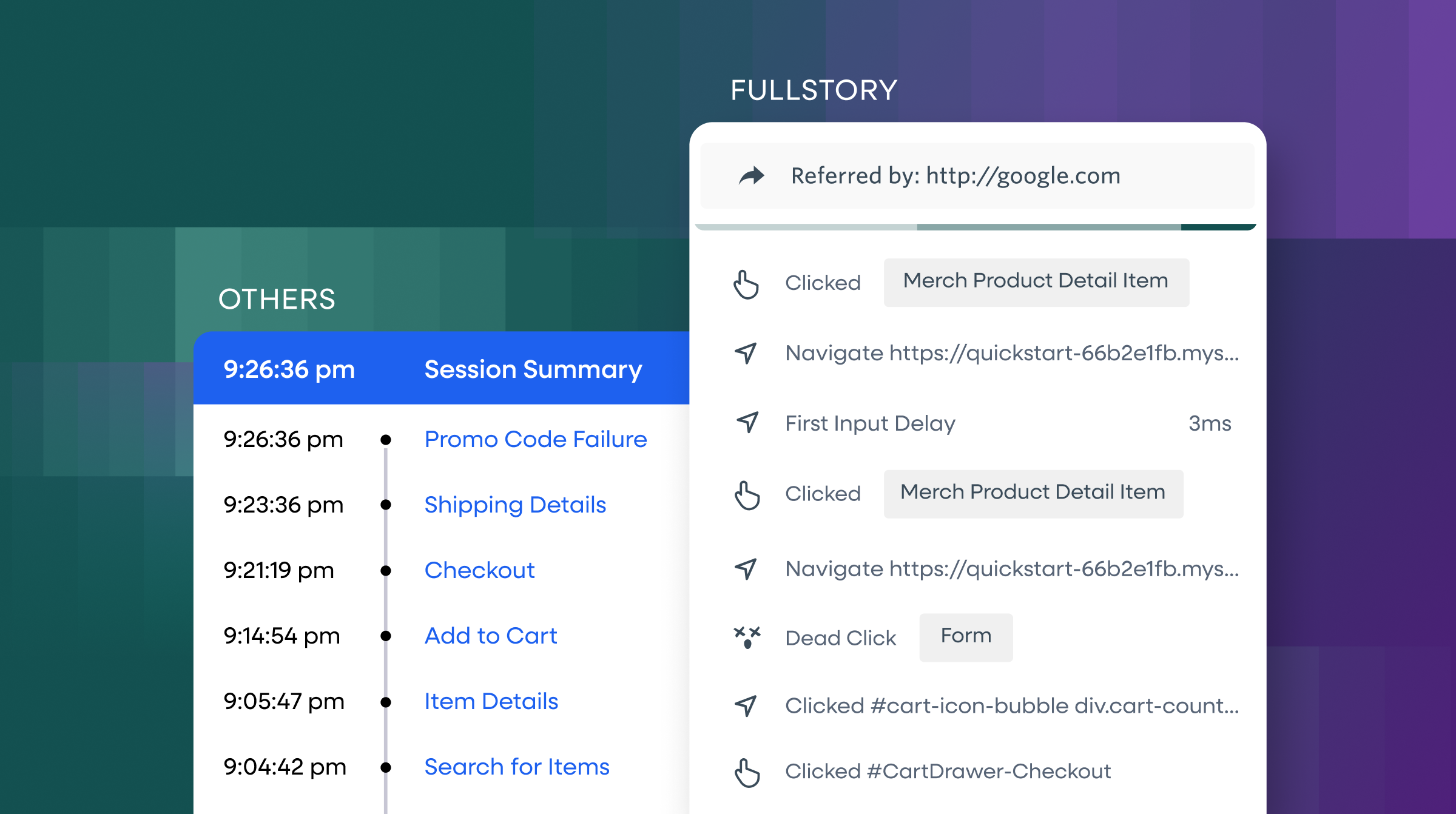
We don't make you guess first. We capture the whole breadth of what happened, then go looking for the challenge you didn't know to ask about. That's the real difference: how deep the behavioral data actually goes.
I still don't have a clean answer for why it took me this long to say that plainly.
"Free" isn't really free
I've talked to a handful of customers lately who went with a competitor because it's free. Fair enough. I hope they get real value from it.
But I always tell them the same thing: free still has a cost. It just doesn't show up on an invoice.
The investment shows up somewhere. Either you pay it up front, instrumenting every part of your business by hand before you learn anything useful. Or you pay it later, going back to that same vendor asking for more availability, more sessions, more access, every time you actually need to use the thing. Someone is spending real time and real budget either way to get what we hand you the first time you set us up.
What we're actually built on
Beyond the session replay people remember us for, three things do the heavy lifting:
In-app guides and surveys that change a user's path in the moment, not after a support ticket gets filed
Real-time activation across your whole stack when something happens in a session
The metadata most tools never show you: the 504s, the 404s, the errors nobody filed a ticket about
Put those together and you get a fuller behavioral picture than any single recording could give you.
So if you're evaluating us against something that's free, ask the vendor one question first: what happens on the day you need the reason behind the number? If they don't have an answer, that's the number that was never really zero.
Curious what's showing up in your own data that nobody's told you about yet? You can start for free and find out.

Kyle Lindsay ✦ Subject Matter Expert
Principal Product Marketing Manager, Fullstory
Kyle Lindsay has over a decade of experience spanning the entire product lifecyle, including pre-sales, post-sales, and go-to-market strategy. He has held roles in technical implementation, sales engineering, and competitive intelligence. As a Principal Platform Product Marketing Manager at Fullstory, Kyle specializes in bridging the gap between complex software solutions and business value.
Featured

Shipping a fix for the wrong root cause charges a compounding tax on engineering resources and customer trust.

83% say behavioral data improves AI decision quality, but most teams aren't using it. See what that gap is costing and how to close it.


Turn behavioral data into a strategic asset that drives faster decisions and measurable returns.
Additional Resources

Agentic Session Review (ASR) is the new normal for gathering session intelligence. Here's why agents beat doing it yourself every time.


Fullstory for Customer Agents streams real-time session context into your support stack, so agents know what happened before replying.


Learn how to structure prompts for the Fullstory MCP to turn hours of manual bug investigation into seconds of automated, behavior-driven triage.